

By Team Cocoriko on 3-Jun-2026 3:24:09 PM
Participatory budgeting has become an interesting tool for bringing organisations, local authorities and institutions closer to their communities. By enabling citizens, members or stakeholders to put forward ideas and directly influence how a budget is allocated, it fosters engagement, transparency and the development of promising projects. In Quebec, several municipalities have already experimented with this democratic approach to give their residents a direct voice.
Thanks to the Cocoriko citizen participation platform, the entire participatory budgeting process can be carried out online in a simple and structured way. In just three steps, your community can move from generating ideas to the actual allocation of the available budget.
Focus the approach on a project
To maximise transparency and engagement, it is recommended that the entire participatory budgeting process be consolidated on a project on Cocoriko.
The project serves as the single point of reference for participants throughout the process. It provides a platform to present the objectives of participatory budgeting, the participation process, online consultations and the terms and conditions for participation. The project also provides a space to identify key contacts, share news and keep the community informed of the process’s progress, as community members can subscribe to the project.
By centralising information in an accessible and scalable environment, organisations facilitate citizen participation whilst building trust and understanding of the process.
Step 1: Generate ideas using the Wall of Ideas
Every participatory budgeting process begins with a simple question: which projects are worth implementing?
Using Cocoriko’s ‘Ideas Wall’ tool, citizens or participants can submit their proposals directly via the platform. The ideas are displayed publicly, allowing other members of the community to view, comment on and develop them further.
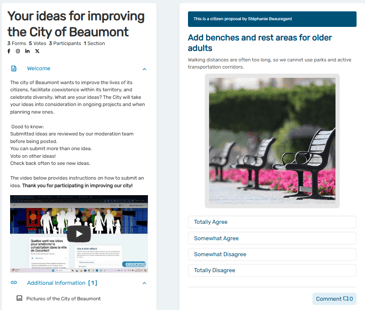
This stage offers several advantages:
-
Giving a voice to as many people as possible;
-
Identifying the real needs on the ground;
-
Fostering collective intelligence;
-
Creating a sense of belonging right from the start of the process.
Unlike traditional consultation processes, where ideas are often shared in isolation, the Ideas Board fosters a genuine collective discussion around the proposals. By voting on and commenting on the ideas submitted, participants can inspire one another and improve the projects even before they are analysed.
The result: a rich, diverse pool of ideas that comes directly from the community.
Step 2: Select and provide details of the shortlisted projects
Once the submission period has ended, a selection committee normally takes over. Its role is to assess the proposals against predefined criteria such as:
-
Technical feasibility;
-
Adherence to the available budget;
-
Relevance to the community;
-
Compliance with the organisation’s regulations or guidelines.
Best practice recommends an analysis phase to turn citizens’ ideas into feasible projects before the final vote.
With Cocoriko, the selected ideas can then be fleshed out within the same project and include information such as:
-
A clear description;
-
The objectives;
-
The estimated costs;
-
The expected benefits;
-
Supporting images or documents.
This stage ensures that participants have all the information they need to make an informed decision when voting.
Step 3: Allocate the budget using the dot voting question
Next comes the most eagerly awaited moment: the collective decision.
Rather than asking participants to choose a single winning project, Cocoriko offers a more nuanced approach through a points-based voting system.
The principle is simple: each participant is allocated a set number of points (or a budget) which they can distribute amongst the shortlisted projects according to their preferences.
For example, if there were 10 points to allocate, the person could award 5 points to a park project, 3 points to an environmental initiative and 2 points to a cultural project.
This method offers several advantages:
Better representation of preferences
Participants are not forced to choose a single project. They can support several initiatives that they consider important.
A more balanced allocation of the budget
Rating-based voting makes it possible to identify the projects that enjoy the broadest consensus, rather than just those that attract a small but highly committed group.
Greater satisfaction with participation
Citizens feel that their preferences are better taken into account, as they can express varying levels of support.
A transparent decision
The results clearly show how the community wishes to allocate the available resources.
Why run your participatory budgeting project on Cocoriko?
By bringing together idea collection, project analysis and voting on a single platform, Cocoriko greatly simplifies the management of a participatory budget.
A seamless citizen experience
Participants use a single environment from start to finish.
Greater participation
Online access makes it easier for more people to get involved, regardless of their schedule or where they live.
Simplified management
The teams in charge bring together ideas, feedback, projects and results in one place.
A transparent approach
Every stage of the process is transparent and documented, thereby building confidence in the approach.
Decisions that are better aligned with actual needs
As the projects originate directly from the community and the community is involved in prioritising them, the investments made are better aligned with the community’s expectations.
Monitor progress during implementation
The project will remain available until the very end of the process—that is, the implementation and roll-out of the selected projects—with news updates and email notifications.
From idea to action
Participatory budgeting follows a simple process: putting forward ideas, turning them into feasible projects, and then allowing the community to decide how to allocate the available resources. This approach helps to strengthen civic engagement, foster innovative solutions and build collective capacity for action.
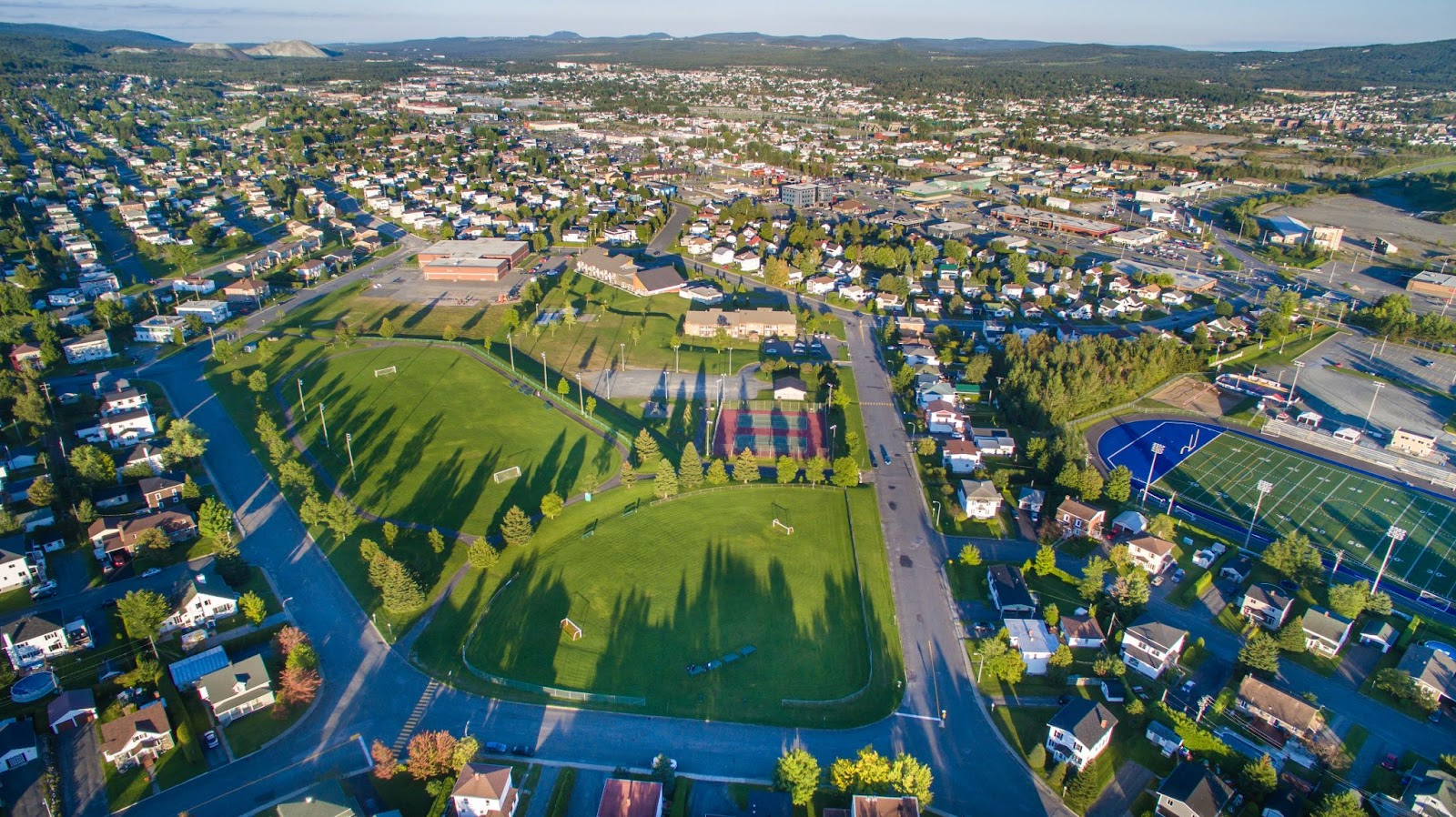
Conduct satisfaction surveys to evaluate cultural and leisure activities
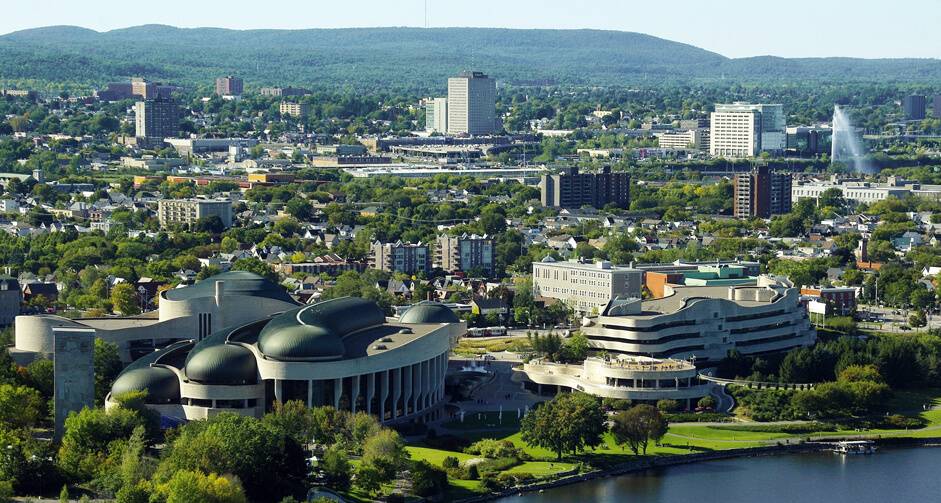
A Complex and Successful Online Consultation for the Urban Development Plan for the Old Aylmer neighborhood
Gatineau, located in western Quebec, is the fourth largest c …

Securing Social Acceptance: A Strategic Challenge for Project Developers
Launching a project — whether it’s mining, energy, industria …